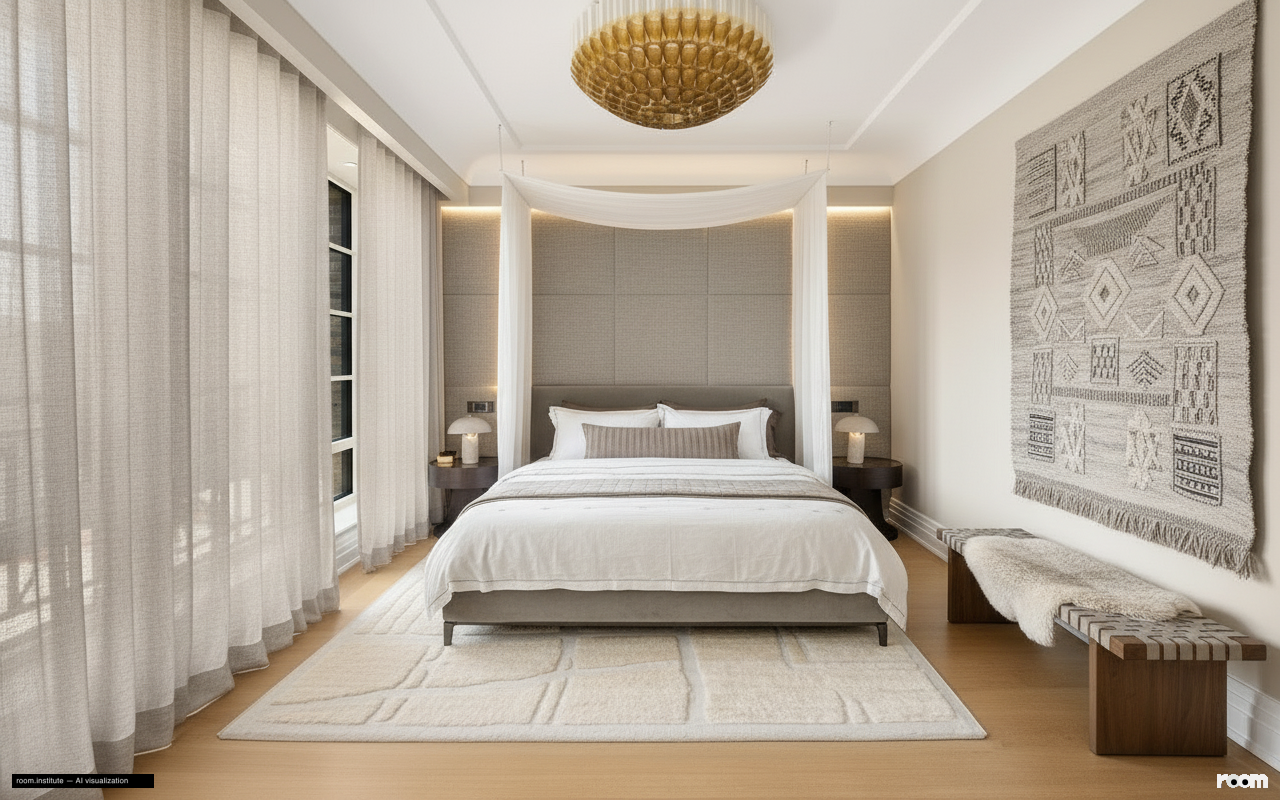
Woven fabric panels slide to partially separate the bed area from the window. Textured linen upholsters the wall behind the bed. This material defines the sleeping zone without structural changes. A sheer fabric canopy drapes above the bed, creating a soft, intimate volume.
A large woven tapestry hangs on the opposite wall, absorbing sound and adding visual depth. Indirect uplighting behind fabric elements illuminates their translucent quality. A deep pile natural wool rug adds softness and acoustic comfort underfoot.
Tactile materials establish zones of comfort without walls.
Design Philosophy
The design implements Tactile Zoning, using responsive layers to define areas. Flexible elements redefine boundaries; they are not static walls. Soft Volumetrics create distinct, intimate zones within the open space. This approach develops enclosure without full obstruction.
Spatial Narrative
The eye first sees the layered fabric panels. It then moves towards the upholstered bed, defining the sleep area. You walk past the sliding panels to reach the window view.
Light Study
Morning light filters softly through the sheer canopy and woven panels. It creates diffuse illumination in the sleeping zone. Evening brings indirect uplighting, highlighting the translucent textures of the fabrics.
Living Vignette
A hand brushes the textured linen behind the bed. The sound of city life outside feels muffled.
Material Palette
Custom woven fabric panels: These feel soft and diffuse light, softening gracefully over time.
Textured linen upholstery: It feels substantial and sound-absorbing, developing a rich patina with use.
Sheer undyed silk: It feels light and airy, softening with continued exposure to light.
Natural wool rug: It feels deep and cushioning underfoot, resisting wear and compacting gracefully.