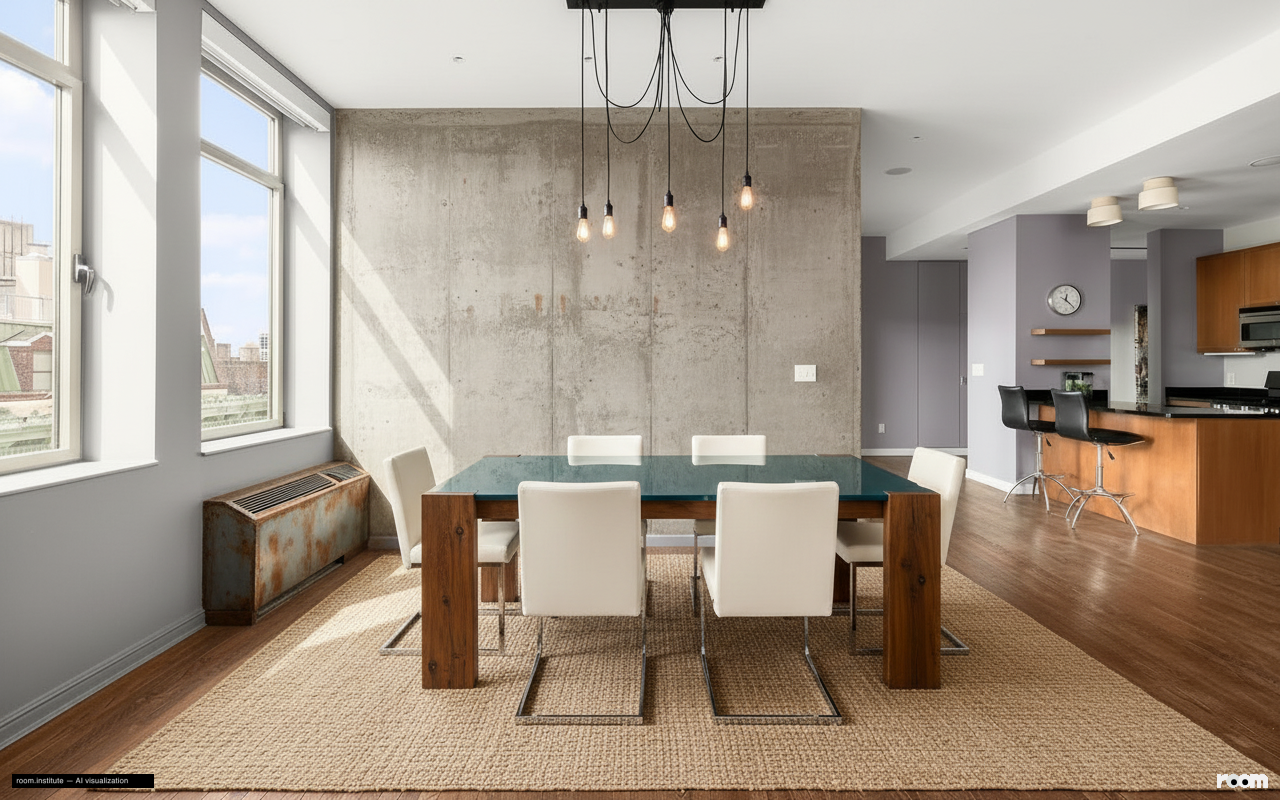
Dining Room • 252 7th Ave Unit 10P, New York, NY 10001
The main dining wall showcases raw concrete, its imperfections vividly sealed. Opposite, smooth violet-grey composite panels present a refined, manufactured contrast. Natural light from large windows illuminates this material friction.
A dining table pairs a reclaimed wood base with a polished synthetic top. Chairs combine chrome frames and creamy white leather. The kitchen island, clad in matte black ceramic tiles, distinctly marks a new material chapter.
This room makes time visible through its materials.
Design Philosophy
This design integrates Industrial Futurism and Deconstruction. It explores material origins and their transformation over time. Japandi principles guide the simple forms and honest textures. The room's surfaces narrate their own distinct timelines.
Spatial Narrative
The eye first registers the raw concrete wall's texture. It then moves across to the smooth composite panels opposite. This material dialogue draws you towards the dining table's contrasting surfaces.
Light Study
Morning light from the large windows sweeps across the concrete, highlighting its imperfections. Evening light, guided by industrial fixtures, sharply defines the deep teal tabletop. It casts dramatic shadows that accentuate material grains.
Living Vignette
A hand rests on the cool, polished dining table surface. The weight of a simple glass feels solid against it.
Material Palette
Exposed sealed concrete: This wall feels rugged and cool, its surface hardens over centuries.
Polished composite panels: These panels offer a smooth, cool touch, maintaining their pristine finish over time.
Untreated steel: The frame feels robust and cool, developing a rich, uneven patina with age.