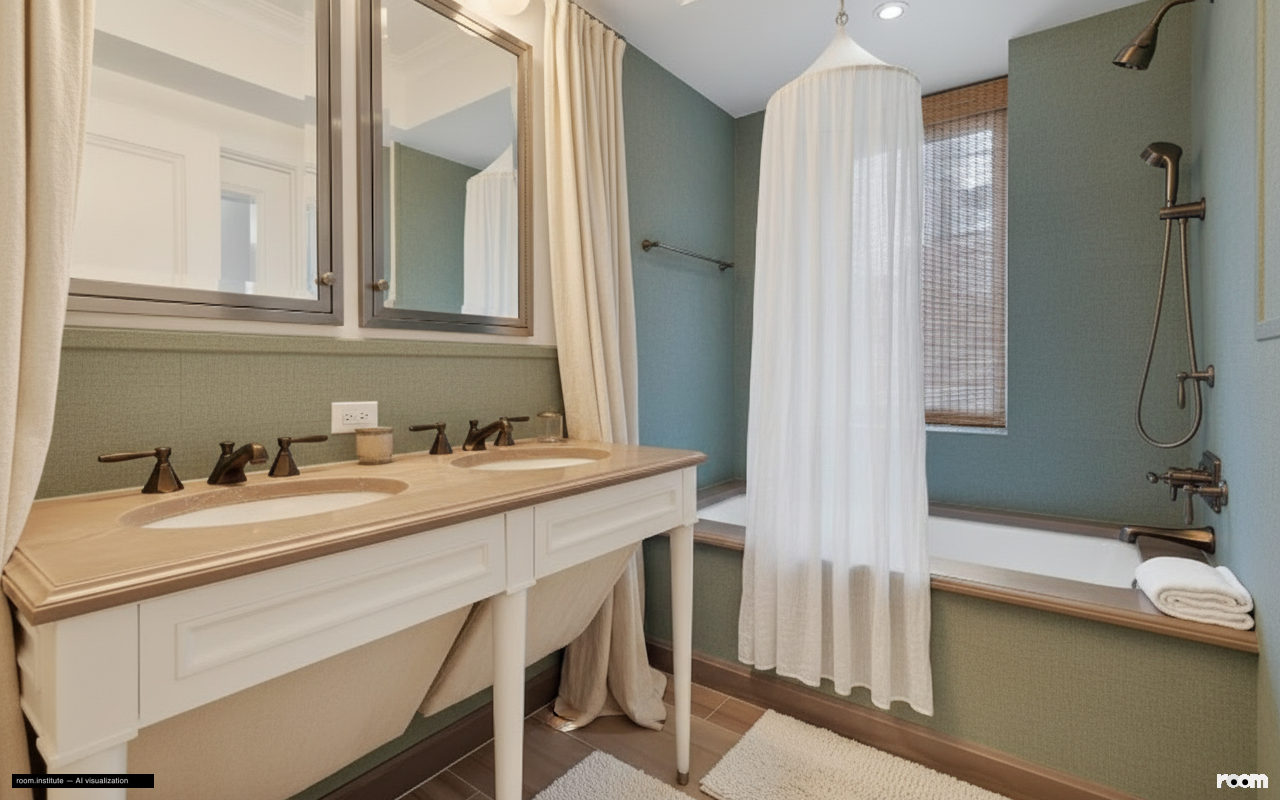
Bathroom • 530 Park Ave Unit 17A, New York, NY 10065
Walls are upholstered in deeply textured fabric. A tailored fabric wrap conceals the vanity base. Floor-to-ceiling woven panels screen the window, diffusing light. Heavy textile drapes define circulation around the vanity. A textile canopy suspends over the bathtub, defining the bathing zone.
This room uses layered fabrics to soften hard surfaces. Textile partitions create fluid zones. This approach makes the bathroom feel protected yet airy. Dark matte bronze fixtures provide contrast.
Fabric partitions create defined, soft zones within the bathroom.
Design Philosophy
This design integrates textiles directly into the bathroom architecture. It introduces fabric panels and screens to soften hard surfaces. The framework of Sensory Softness guides material choices. Dynamic Enclosure is achieved by creating permeable zones with woven elements.
Spatial Narrative
Your eye first moves to the suspended textile canopy over the bathtub. You walk through the soft guidance of floor-length drapes near the vanity. The upholstered walls and surrounding fabric create an enveloping feel while bathing.
Light Study
Morning light filters softly through the woven window screens, creating a diffused glow across the room. In the evening, strategic hidden lighting washes the upholstered walls, reflecting a warm, gentle illumination. The textile canopy over the tub creates a localized, intimate light.
Living Vignette
You reach for a towel from a draped hook, the fabric soft against your hand. Water runs quietly into the tub under the textile canopy.
Material Palette
Sheer, tightly woven linen: This fabric feels light and lets diffused light pass through, softening into a gentle drape over time.
Moisture-resistant acoustic textile: This fabric feels deeply textured and absorbs sound, retaining its soft character with consistent wear.
Natural fiber woven screens: These screens feel tactile and provide permeable visual boundaries, developing subtle color changes over time.