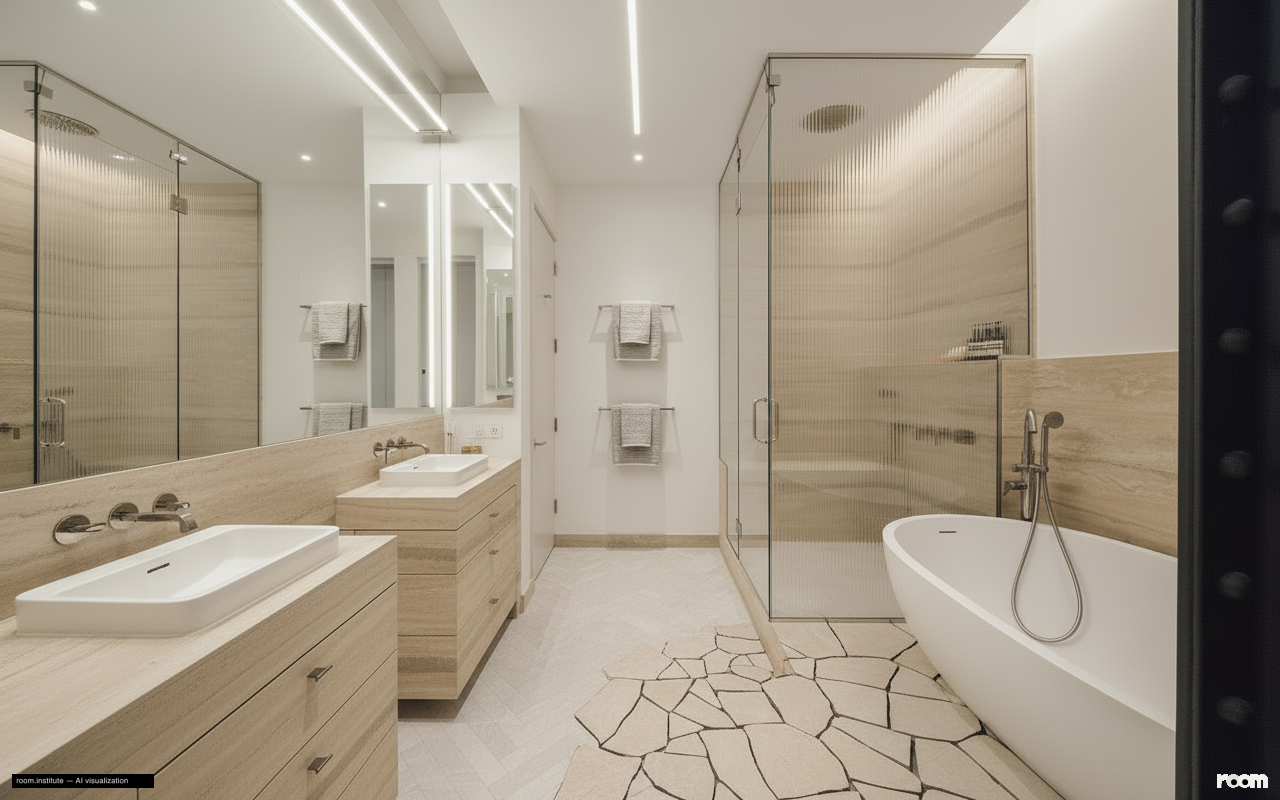
A reeded glass and metal screen partially encloses the bathing zone. This screen alters traditional spatial division. Two individual floating vanity units replaced a single long one. This creates a pause in the wall's length.
Wall-mounted faucet controls moved to a slender vertical panel. Linear lighting integrates into the screen and vanity. The floor pattern shifts from herringbone to a fragmented arrangement. This guides movement through the bathing zone.
This room uses screens and breaks to direct movement and view.
Design Philosophy
Figura constructionis guides the room's segmented structure. The reeded glass screen introduces Prospect and refuge. This partially encloses the bathing area, creating a sense of enclosure without full separation. Visual connections shift as one moves through the space.
Spatial Narrative
Your eye first traces the long reeded glass screen. You walk along the separated vanity units, noticing the deliberate gap. The journey slows near the fragmented floor pattern by the tub.
Light Study
Morning light enters gently, softened by the reeded glass. Recessed linear lights define the bathing zone. In the evening, integrated lighting from the screen and vanity illuminates the space with precise lines.
Living Vignette
Water from the floor-mounted filler streams into the freestanding tub. The textured glass screen subtly blurs the room beyond.
Material Palette
Blackened steel: Blackened steel frames feel cool and strong. It holds its dark finish over time. This provides structural definition.
Reed glass: Reed glass panels offer a textured, translucent surface. It diffuses light gently. The material remains clear and stable.
Light stone: Light stone surfaces feel smooth and cool. This material develops a subtle patina with age. It offers durable, natural texture.