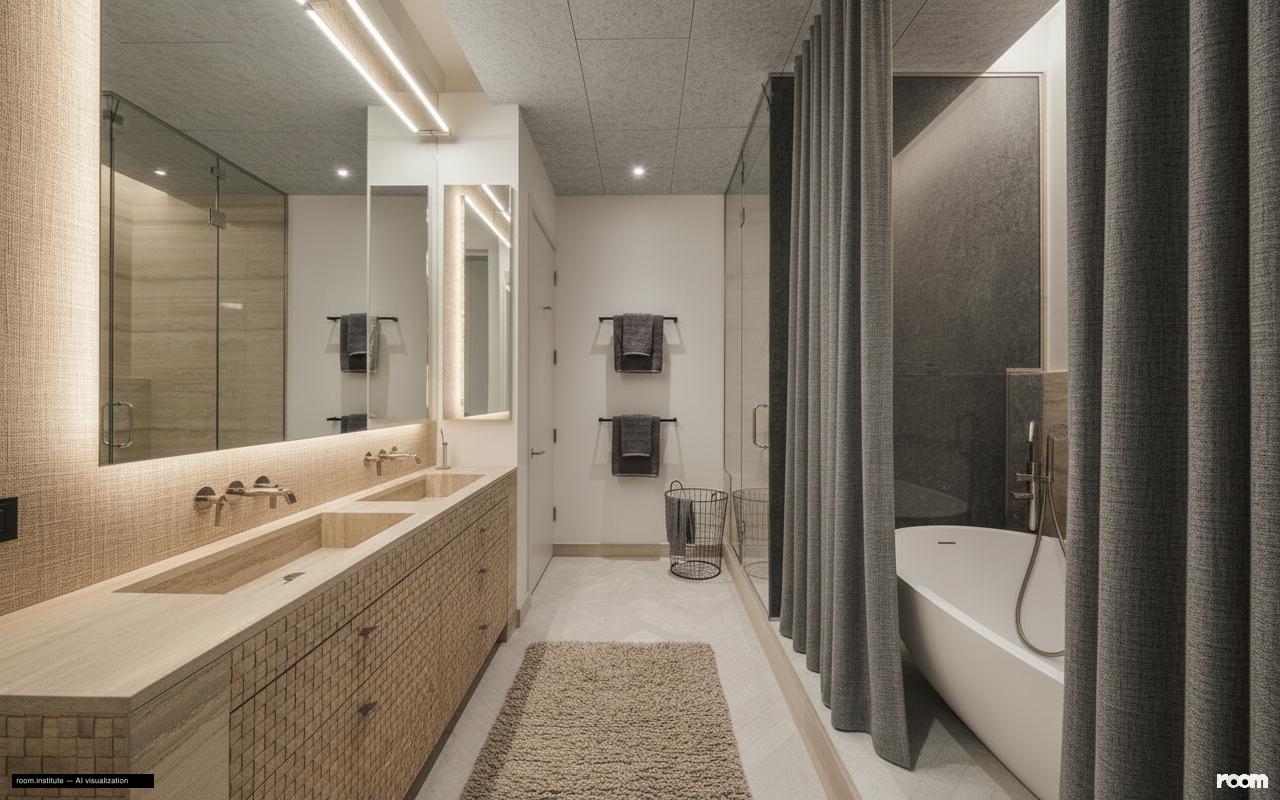
Rigid felt defines the shower enclosure, absorbing sound. A large, backlit textile panel replaces the vanity mirror, acting as the primary light source and sound dampener. A heavy, woven curtain fully encloses the tub, providing flexible privacy.
Acoustic felt panels line parts of the ceiling, ensuring stable sound dampening. Plumbing fixtures integrate flush with the textile walls, emphasizing the woven architecture. Woven wood veneer refaces the vanity, adding consistent texture. A thick wool rug grounds the floor.
Woven forms create continuous, acoustically soft interiors.
Design Philosophy
This design establishes a continuous, calming environment. It uses Textile architecture to define space and acoustics. Rigid felt and woven panels create soft, sound-absorbing enclosures. The consistent application of woven textures achieves Eustathia across all surfaces.
Spatial Narrative
Your eye first lands on the backlit textile panel above the vanity. You walk across the wool rug, guided towards the private tub or the sound-dampened shower. Both spaces offer an enveloping, quiet enclosure.
Light Study
Morning light is soft, filtered through any existing windows, playing subtly across woven textures. Throughout the day, a large, backlit textile panel provides a foundational, ambient glow. Recessed lighting supplements this, ensuring even, comfortable illumination in the evening.
Living Vignette
Stepping from the shower, the felt enclosure dampens the sound of water on tile. You dry off, feeling the soft wool rug underfoot, a moment of quiet comfort.
Material Palette
Rigid architectural felt: This woven felt creates stable, soft surfaces that absorb sound over time.
Large format woven linen: This natural fiber feels soft to the touch and develops a subtle patina with age.
Woven wood veneer: The thin wood veneer offers a consistent, tactile surface that deepens in color over decades.