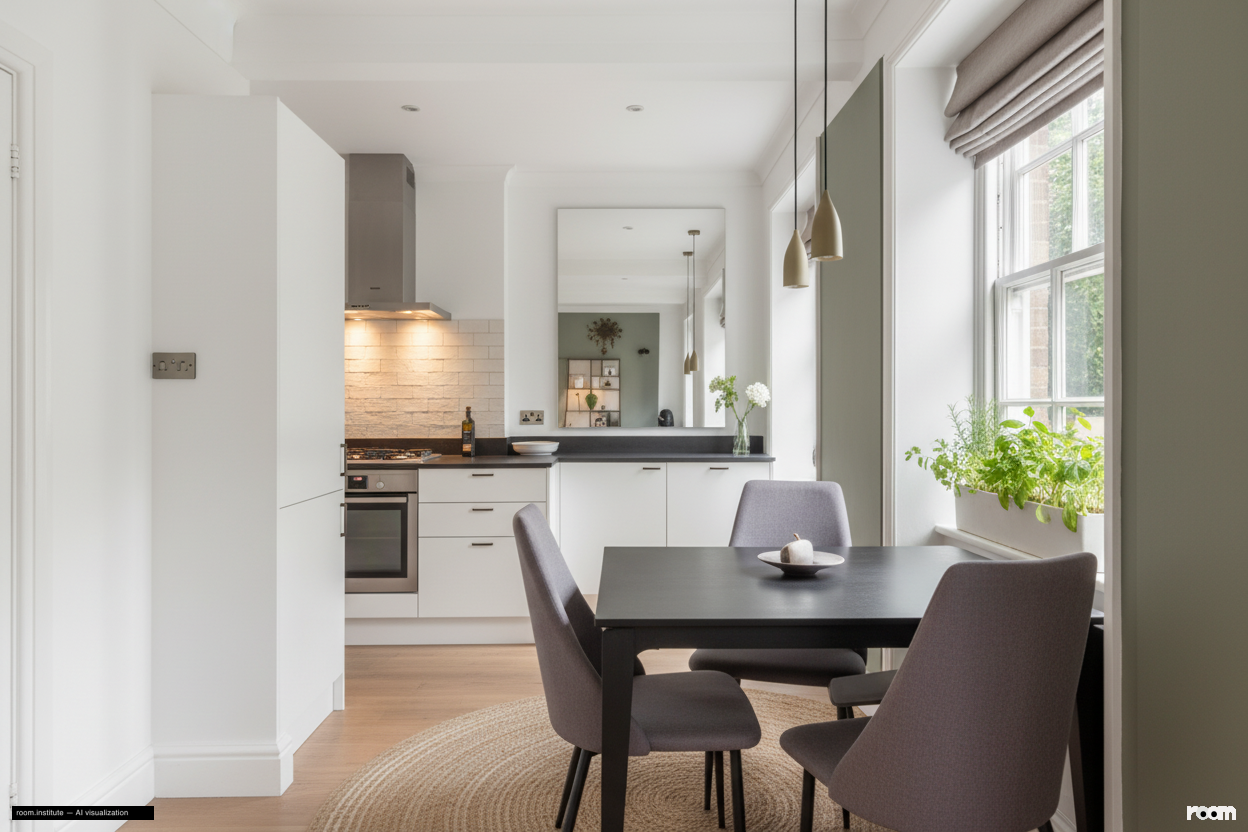
Acoustic panels now quiet the dining area, absorbing sound. A built-in planter releases fresh herb aromas into the space. A thick jute rug warms the floor underfoot, creating thermal contrast. Focused task lighting provides subtle heat over work zones.
Textured ceramic tiles add depth to the kitchen backsplash. Hard floor sections contrast with soft rug areas. Each surface contributes to a progression of sensory experiences. Specific zones offer varied temperatures and tactile qualities.
The room guides your senses through distinct, tangible zones.
Design Philosophy
The design prioritizes how a space feels and sounds. Haptic Architecture uses varied textures to guide physical interaction. Olfactory Storytelling introduces subtle scents to define areas. This creates distinct zones through sensory progression.
Spatial Narrative
Your eye first lands on the deeply textured ceramic backsplash. You walk from the cool, hard floor onto the soft, warm jute rug. You sit at the dining table, feeling the focused warmth from above.
Light Study
Morning light streams from the window, highlighting the coarse rug texture. Evening task lights cast warm, specific pools over prep areas. These focused lights make functional zones feel inviting after dusk.
Living Vignette
A hand brushes the rough surface of the ceramic backsplash. The air carries the faint aroma of rosemary from the planter.
Material Palette
Compressed wool felt: Absorbs sound and feels soft; it retains its texture over time.
Hand-woven jute: Offers a coarse, natural texture underfoot; it softens slightly with age.
Unglazed ceramic tiles: Provides a deep, uneven texture; it develops a subtle patina with use.