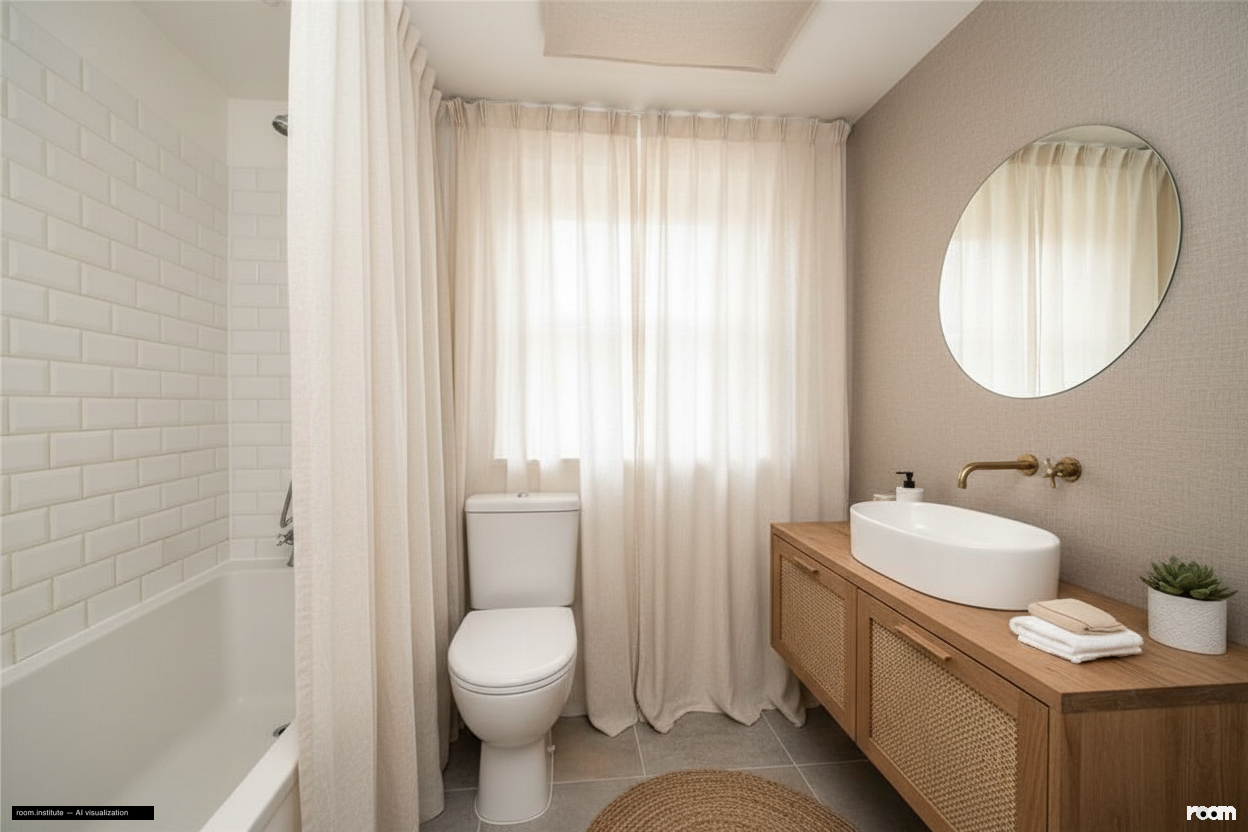
Hard surfaces yield to soft textiles. Fabric panels delineate shower and toilet zones. Woven cabinet fronts replace rigid panels. An upholstered wall section softens the sink area.
Textured plaster replaces subway tiles. Fabric elements layer over walls. Muted ceramic tiles complete the floor. A hand-woven jute rug anchors the dry area.
This room transforms hard surfaces into a gentle, tactile experience.
Design Philosophy
This design uses **Soft Zoning** to redefine the bathroom's functions. Sheer fabric panels create permeable divisions, replacing hard walls. **Tactile Layers** introduce warmth and comfort. Woven and upholstered materials replace cold surfaces.
Spatial Narrative
Your eye first lands on the soft, diffused light from the window. You walk into the main space, defined by sheer fabric panels. These panels guide you gently toward the shower or toilet areas.
Light Study
Morning light filters softly through the linen curtain, filling the room with a gentle glow. Overhead, a fabric-wrapped ceiling panel provides diffused, ambient light in the evening. This creates a consistent, warm illumination throughout the day.
Living Vignette
The subtle texture of the woven cabinet feels soft under your fingers as you reach for a towel. Steam from the shower gently mists the sheer fabric panels, creating an intimate blur.
Material Palette
Textured plaster walls: This finish feels soft and organic. It gains character with minor imperfections over time.
Linen sheer fabric: This fabric feels light and airy. It softens with each wash, draping beautifully.
Woven natural fiber: This material feels warm and textured. It develops a rich patina and subtle variations.