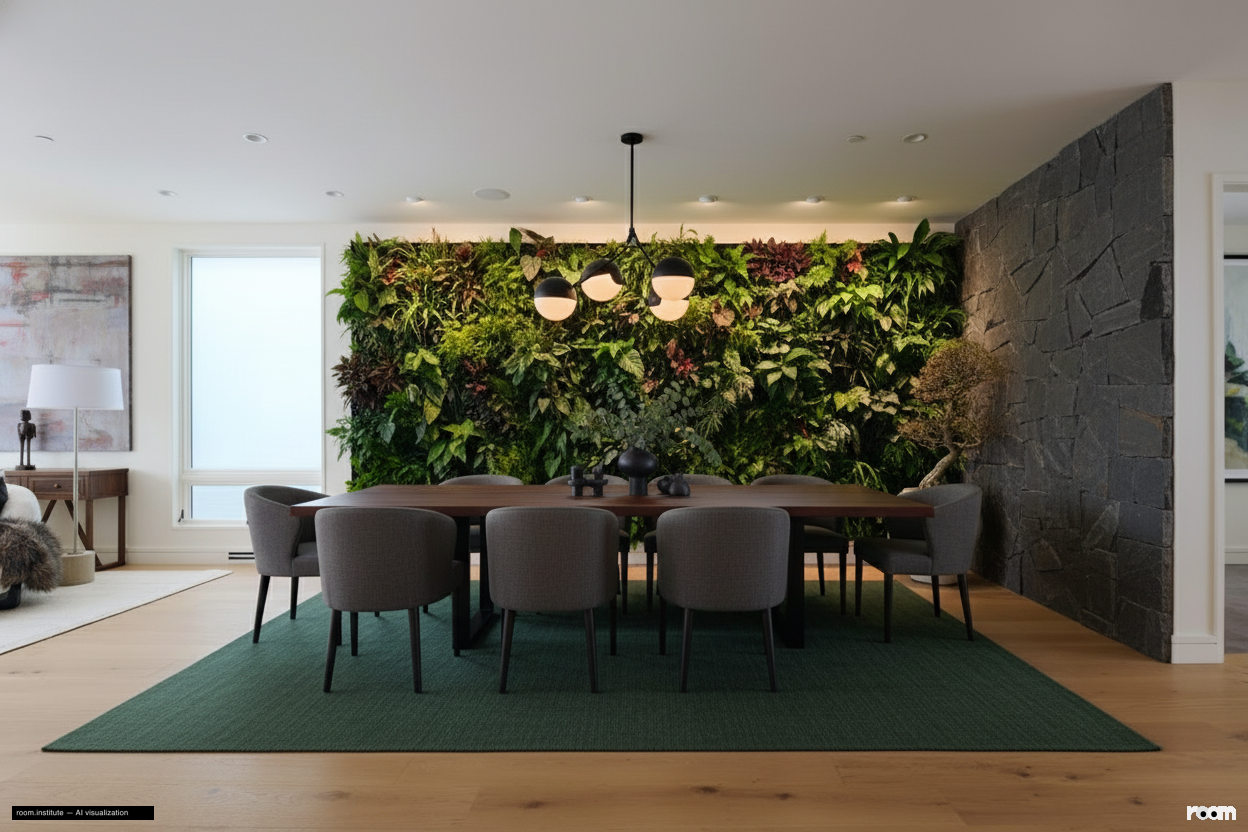
The room now features a dense living wall on one side. Opposite, a raw basalt stone wall creates deep shadow. A live-edge wood dining table with a minimalist steel base anchors the center. Strategic lighting mimics natural forest light and deep cave shadows.
A flatweave forest green rug integrates with the biophilic elements. Sculptural plants offer moments of visual stillness. This design creates a compelling environment through material tension. It forces interaction between natural abundance and ancient permanence.
This room makes nature's opposing forces undeniable.
Design Philosophy
This space employs Regenerative Design to integrate living elements directly. A vertical living wall introduces overwhelming natural abundance. Material Duality drives the room's dynamic tension. Raw stone contrasts with lush plant life, creating opposing forces.
Spatial Narrative
The eye first lands on the vibrant, dense living wall. It then moves to the opposite dark basalt, establishing stark contrast. The live-edge dining table draws you to the room's center.
Light Study
Morning sunlight streams through the windows, brightening the living wall's varied leaves. Evening brings dappled spotlights, highlighting the living elements. Deep shadows define the rough texture of the basalt wall.
Living Vignette
Guests trace the natural edge of the dining table with their fingers. A leaf on the living wall slowly unfurls toward the light.
Material Palette
Living plants: Their textures shift daily; growth and decay are visible.
Rough-hewn basalt stone: Its dark, uneven surface holds geological time; it gains character with age.
Live-edge dark wood: Its organic shape feels warm; natural oils deepen its luster over years.
Powder-coated black steel: This material offers a cool, rigid structure; its finish resists wear.
Natural linen upholstery: Its soft, matte texture grounds the space; it develops a natural patina.