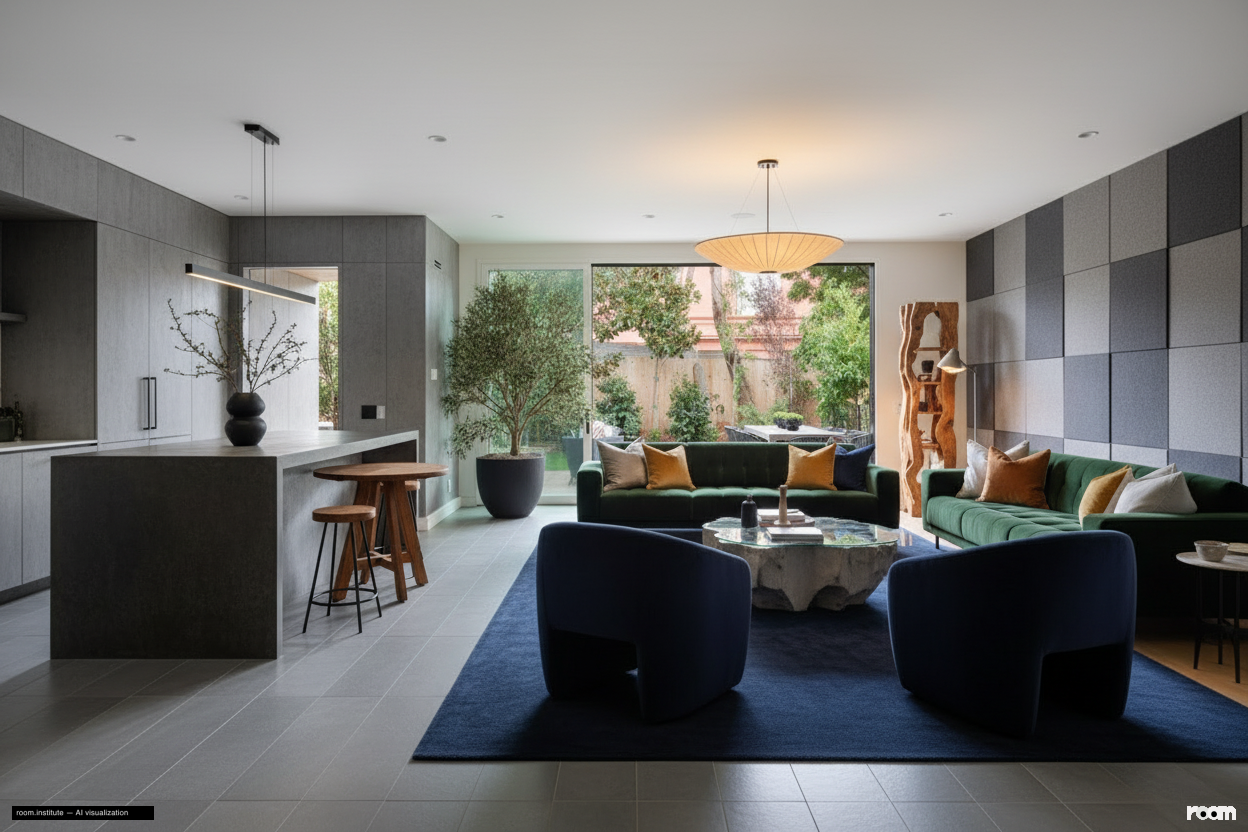
One wall features polished concrete panels; the opposing wall holds felted wool acoustic panels. This creates contrasting soundscapes. Cool porcelain tiles mark the kitchen and entryway. A thick wool carpet warms the main lounge area.
Furniture pairs raw concrete and coarse linen with smooth glass and soft velvet. Distinct scent zones are introduced: invigorating citrus in the kitchen, grounding cedar in the lounge. Lighting blends sharp, cool task light with soft, warm ambient illumination.
The room engages senses through active contrast.
Design Philosophy
The design creates a Sensory Paradox within an open-plan space. It utilizes Sensory Juxtaposition to present simultaneous, opposing experiences. Thermal Zoning defines distinct temperature shifts across areas. This generates a dynamic internal tension through varied textures, sounds, and light.
Spatial Narrative
The eye is drawn first to the contrasting acoustic surfaces on opposing walls. One walks from cool porcelain in the kitchen into the warm, plush wool carpet of the lounge. Here, diverse seating invites repose amidst varied tactile experiences.
Light Study
Morning light streams in, highlighting the reflective concrete wall and bright kitchen task lighting. As evening approaches, soft, dimmable warm light in the living area creates a gentle glow. Directional cool light remains focused on the kitchen island, ensuring functionality.
Living Vignette
Footsteps echo slightly near the polished concrete, then are absorbed by the thick carpet. A cool drink rests on a smooth surface, while a textured throw drapes a rough-linen chair.
Material Palette
Polished concrete panels: These panels feel cool and hard, developing a subtle sheen with age.
Felted wool panels: These panels are deeply textured and soft, holding their sound-absorbing qualities over time.
Thick wool carpet: This plush carpet feels soft and warm underfoot, settling into its fibers with use.