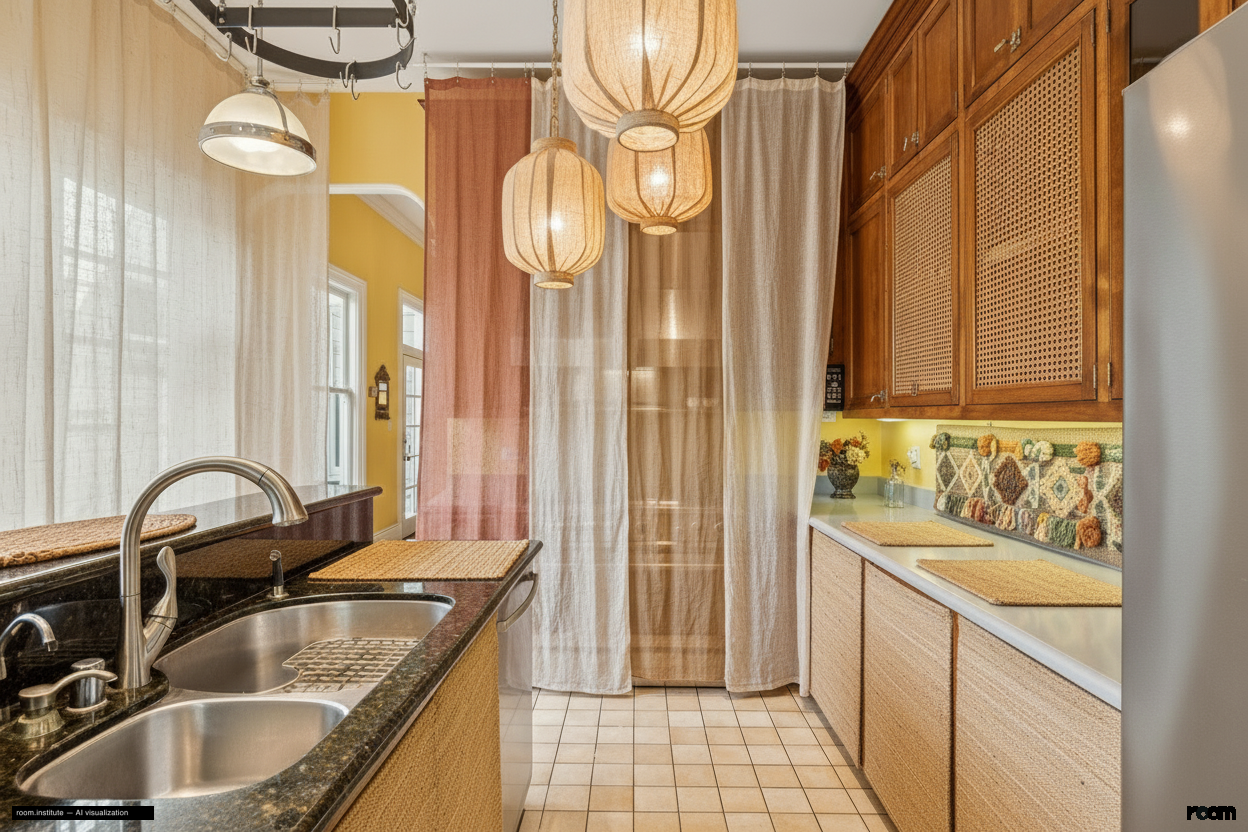
Hard walls disappear, replaced by layered fabric panels. These textiles slide on tracks, changing the room's shape. Lower cabinets are upholstered in durable woven fabric. Upper doors feature woven cane inserts, adding visual lightness.
Dark countertops are gone, exchanged for matte light quartz. Fabric lanterns diffuse all overhead light. A large woven tapestry anchors the main wall. A hand-knotted wool rug adds warmth to the floor.
Fabric makes this kitchen a tactile, hushed space.
Design Philosophy
This design centers on creating an environment rich in sensory experience. Textural Immersion layers fabrics on all surfaces, from walls to cabinetry. This approach builds visual depth and invites touch. Soft Acoustics quiet the space, absorbing echoes with fabric panels and ceiling treatments.
Spatial Narrative
Your eye first registers the soft, layered fabric walls. It then follows the line of upholstered lower cabinetry, drawing you into the room. A large woven tapestry commands attention, anchoring the main cooking zone.
Light Study
Morning light filters gently through layered fabric panels, softening shadows. Overhead fabric lanterns diffuse all evening light into a warm, ambient glow. Under-cabinet valances hide direct sources, spreading a soft, indirect wash across work surfaces.
Living Vignette
A hand runs across the textured lower cabinet upholstery. The room's fabric-lined ceiling quietly dampens the clatter of pans.
Material Palette
Layered Fabrics: These textiles offer a soft drape and absorb sound, softening over time with a subtle relaxed quality.
Woven Linen Canvas: This robust fabric feels substantial and textured, developing a slight patina with use while retaining its strength.
Woven Cane: Light and breathable, cane provides visual texture and airiness, darkening slightly with age.